Introduction
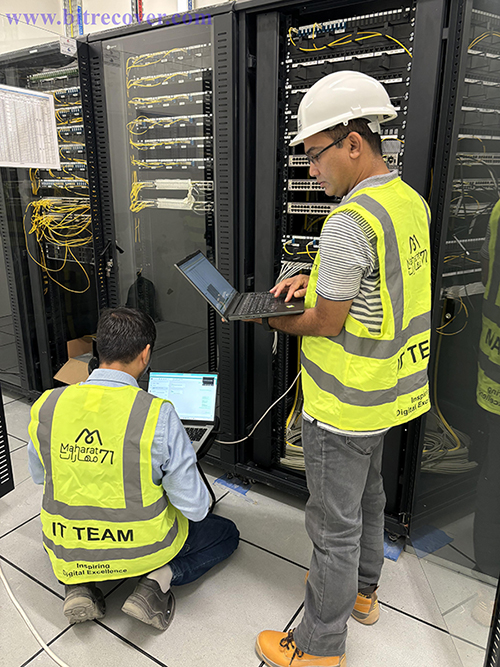
Over the last decade, the United Arab Emirates has undergone a remarkable digital transformation in its education sector. Network cabling, often referred to as the backbone of digital infrastructure, has played a pivotal role in enabling smart classrooms, e-learning, and connected campuses. From early initiatives aimed at digitizing schools to the accelerated adoption of virtual learning during the COVID-19 pandemic, the UAE has continuously invested in structured cabling systems to support its ambitious vision of a knowledge-based society.
Early Developments: Building the Foundation
In the early 2010s, the country introduced smart learning programs designed to integrate tablets, interactive boards, and digital content into classrooms. This required not only wireless connectivity but also a structured cabling framework to ensure stability, bandwidth, and security. Cabling systems during this period shifted from basic copper solutions to more sophisticated structured cabling designs, incorporating both copper and fiber optics to support growing data needs.
Educational institutions were required to guarantee uninterrupted access to electricity and high-speed internet, making structured cabling essential for meeting regulatory and operational standards. This laid the groundwork for a culture of digital readiness across schools and universities.
Pandemic Acceleration: From Connectivity to Continuity
The onset of the COVID-19 pandemic in 2020 dramatically accelerated the demand for robust network infrastructure. Schools and universities had to pivot almost overnight to online and hybrid learning models. To support this shift, broadband speeds were expanded nationwide, and institutions invested in higher-capacity cabling to connect servers, classrooms, and data centers.
Fiber-optic backbones became increasingly prevalent, ensuring minimal latency and maximum bandwidth to handle video conferencing, cloud-based platforms, and digital collaboration tools. For many institutions, this period marked the transition from traditional cabling layouts to fully standardized, scalable, and future-proof solutions.
The Rise of Smart Campuses
In recent years, the UAE’s education sector has embraced the concept of smart campuses—digitally integrated environments where teaching, administration, and research activities are powered by advanced technology. Structured cabling plays a central role in these ecosystems, supporting:
Learning Management Systems (LMS): Seamless access to online content and student data.
Smart Classrooms: Integration of interactive displays, sensors, and audiovisual systems.
Hybrid Learning Models: Stable, high-speed connectivity for both in-person and remote learners.
Research and Data Exchange: Reliable cabling for high-capacity data transfer between laboratories and academic networks.
These developments have led to a more modular cabling architecture, with clear separation between backbone cabling, horizontal cabling to classrooms, and work-area connections.
Expansion of Data Capacity and Scalability
Another major trend has been the expansion of data center capacity linked to educational institutions. In just a few years, the UAE has significantly increased its ability to host and process educational data, enabling artificial intelligence applications, digital libraries, and high-performance computing in universities.
Structured cabling has evolved to support these expansions, with a strong emphasis on scalability. Instead of designing for immediate needs alone, institutions now implement cabling systems that anticipate future increases in bandwidth demand, new technologies, and higher device densities.
Looking Ahead: Future-Proofing Education
The progression of network cabling in the UAE’s education sector highlights a shift from short-term solutions to long-term strategic planning. Moving forward, educational institutions are expected to continue investing in:
Fiber-rich infrastructures capable of supporting 5G integration and IoT applications in classrooms.
Power over Ethernet (PoE) solutions to power devices like IP cameras, sensors, and wireless access points directly through the cabling system.
Enhanced cybersecurity measures at the physical and digital layers of network infrastructure.
Sustainable designs that align with environmental goals while reducing maintenance costs.
Conclusion
The evolution of network cabling in the UAE’s education sector tells a story of resilience, foresight, and continuous modernization. What began as the digitization of classrooms has grown into an ecosystem of smart campuses, virtual learning environments, and globally competitive research hubs. By steadily upgrading and future-proofing its cabling infrastructure, the UAE has ensured that its educational institutions remain agile, connected, and ready to meet the challenges of the future.
Related Articles